



Polyethylene (PE)

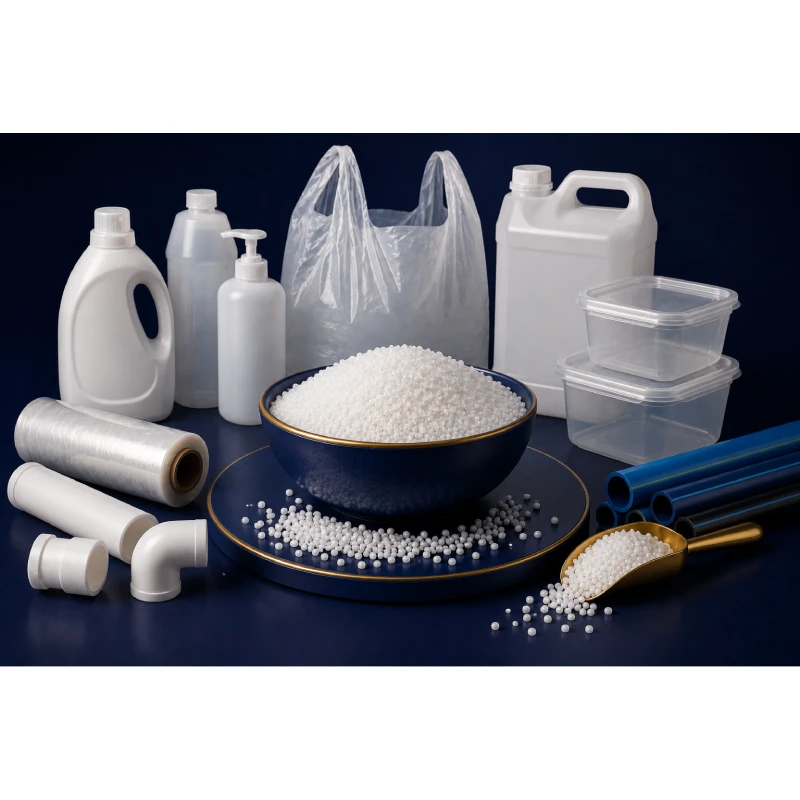
Polyethylene (PE) is one of the most important and widely used thermoplastic polymers in the world, produced through the polymerization of ethylene gas (C₂H₄).
Due to its excellent mechanical, chemical, and thermal properties, polyethylene is extensively used in packaging, piping, automotive, medical, and construction industries. Its cost-effectiveness, durability, and recyclability have made it a key material in the supply chain of chemical and manufacturing industries worldwide.
Chemical Structure and Production Process of Polyethylene
Polyethylene is produced through either radical or catalytic polymerization of ethylene gas. Its basic chemical formula is:
(–CH₂–CH₂–)ₙ
Depending on reaction conditions such as pressure, temperature, and catalyst type, polyethylene can exhibit branched, linear, or semi-crystalline molecular structures.
Main Polyethylene Production Methods
- High-pressure polymerization → Production of Low-Density Polyethylene (LDPE)
- Low-pressure polymerization using Ziegler-Natta or metallocene catalysts → Production of High-Density Polyethylene (HDPE) and Linear Low-Density Polyethylene (LLDPE)
Types of Polyethylene and Their Characteristics
1. Low-Density Polyethylene (LDPE)
Low-Density Polyethylene (LDPE) is a semi-crystalline thermoplastic polymer characterized by numerous branches and non-linear polymer chains. This branched structure provides low density, high flexibility, and good transparency.
LDPE is primarily produced through high-pressure polymerization processes.
Key Characteristics
- Branched molecular structure
- Density: approximately 0.91–0.93 g/cm³
- High flexibility
- Good transparency
- Excellent impact resistance
Applications
- Packaging films
- Cable insulation
- Plastic bags
- Flexible bottles and containers
Advantages
- Excellent flexibility
- High moisture resistance
- Easy production of ultra-thin films
- Good chemical stability
Disadvantages
- Lower heat resistance
- Lower tensile and tear strength compared to LLDPE
- Reduced rigidity
Market Overview
Due to its competitive price and high demand in the packaging industry, LDPE remains one of the most important polymers in the Iranian market. The food packaging, agricultural, and general packaging sectors continue to be major consumers, and demand is expected to grow steadily.
2. High-Density Polyethylene (HDPE)
High-Density Polyethylene (HDPE) features a predominantly linear molecular structure with minimal branching. This structure provides high density, high crystallinity, superior tensile strength, and exceptional rigidity.
HDPE is commonly produced through low-pressure polymerization in the presence of Ziegler-Natta or metallocene catalysts.
Key Characteristics
- Linear molecular structure
- Density: approximately 0.94–0.97 g/cm³
- High mechanical strength
- Excellent chemical resistance
Applications
- Water and sewage pipes
- Chemical containers
- Storage tanks
- Automotive components
- Industrial coatings
Advantages
- Higher strength than LDPE
- Excellent impact resistance
- Suitable for heavy-duty industrial applications
- Long service life
Disadvantages
- Lower transparency
- Less flexibility than LDPE
- Requires precise processing parameters during extrusion and injection molding
Market Overview
HDPE is one of the best-selling polyethylene grades in construction, packaging, and piping industries. EX and BM grades are particularly popular in Iran’s petrochemical market and consistently rank among the most demanded raw materials.
3. Linear Low-Density Polyethylene (LLDPE)
Linear Low-Density Polyethylene (LLDPE) is a semi-linear polyethylene produced by copolymerizing ethylene with comonomers such as 1-butene, 1-hexene, or 1-octene.
These comonomers create short-chain branching, significantly improving the mechanical performance compared to conventional LDPE.
Key Characteristics
- Structure between LDPE and HDPE
- High tensile strength
- Excellent heat-sealing properties
Applications
- Stretch films
- Food packaging films
- Industrial wrapping materials
Advantages
- Superior mechanical strength compared to LDPE
- Enables thinner film production
- Good transparency depending on comonomer type
- Excellent impact resistance
Disadvantages
- More difficult processing compared to LDPE
- Requires precise temperature control during film production
- Some grades exhibit lower transparency than LDPE
Market Overview
LLDPE is one of the most widely consumed film-grade polymers worldwide. Due to its superior strength, many manufacturers are replacing LDPE with LLDPE in film applications. Grades 209, 204, and 22B are among the most popular commercial grades.
Comparison of Polyethylene Types
| Property | LDPE | HDPE | LLDPE |
|---|---|---|---|
| Density (g/cm³) | 0.91–0.93 | 0.94–0.97 | 0.92–0.94 |
| Molecular Structure | Branched | Linear | Semi-linear |
| Flexibility | Very High | Low | High |
| Chemical Resistance | Moderate | Excellent | Excellent |
| Transparency | High | Low | Medium |
| Main Applications | Packaging, Cable Coating | Pipes, Tanks, Industrial Containers | Stretch Films, Food Packaging |
Key Properties of Polyethylene
- Excellent resistance to acids and alkalis
- Strong electrical insulation properties
- Lightweight with excellent processability
- Suitable for injection molding, extrusion, and blow molding
- Recyclable and environmentally friendly
- Adjustable UV and thermal resistance through additives
Industrial Applications of Polyethylene
Polyethylene is considered a versatile polymer used in numerous industries, including:
Packaging Industry
- Plastic films
- Food containers
- Industrial wrapping materials
Pipes and Fittings
- Water distribution systems
- Sewage pipelines
- Gas transmission lines
- Chemical transfer systems
Automotive Industry
- Impact-resistant components
- Wire insulation
- Fuel tanks
Medical and Pharmaceutical Industry
- Syringes
- Medical tubing
- Disposable medical devices
Construction and Agriculture
- Cable coatings
- Greenhouse films
- Moisture barriers and insulation
Advantages and Disadvantages of Polyethylene
Advantages
- Excellent chemical resistance
- Lightweight and easy processing
- Cost-effective compared to many polymers
- Recyclable and environmentally friendly
Disadvantages
- Susceptible to UV degradation without stabilizers
- Limited performance at elevated temperatures (typically below 120°C)
Polyethylene Pricing
Polyethylene prices are influenced by several factors, including:
- Global crude oil prices
- Currency exchange fluctuations
- Product grade and specifications
- Manufacturer and brand
In the Iranian market, LDPE and HDPE are among the most widely traded grades and are generally offered at relatively similar price levels.
For updated pricing information and technical purchasing consultation, please contact the sales specialists at Tamin Kala Tak.
Polyethylene Purchasing Guide
Selecting the right polyethylene grade requires a thorough understanding of product density, physical properties, and intended application. Depending on the manufacturing process—whether injection molding, extrusion, or blow molding—companies typically choose between LDPE, HDPE, and LLDPE grades.
Working with a reliable supplier that provides detailed technical analyses and consistent quality is crucial for reducing production costs and improving operational efficiency. Companies such as Tamin Kala Tak simplify the purchasing process by offering technical consultation and direct supply from reputable petrochemical producers.
Polyethylene (PE) vs. Polypropylene (PP)
| Property | Polyethylene (PE) | Polypropylene (PP) |
|---|---|---|
| Chemical Formula | (–CH₂–CH₂–)ₙ | (–CH₂–CH(CH₃)–)ₙ |
| Production Source | Ethylene Polymerization | Propylene Polymerization |
| Density (g/cm³) | 0.91–0.97 | 0.90–0.91 |
| Melting Point (°C) | 105–135 | 160–170 |
| Heat Resistance | Moderate (up to 110°C) | High (up to 140°C) |
| Chemical Resistance | Excellent | Excellent |
| Impact Resistance | Excellent, especially at low temperatures | Moderate, more brittle in cold conditions |
| Flexibility | High | Lower than PE |
| Transparency | High (LDPE & LLDPE) | Lower, semi-transparent to opaque |
| Processability | Excellent | Excellent |
| Recyclability | High (Codes 2 & 4) | High (Code 5) |
| Main Applications | Pipes, Films, Containers, Medical Equipment | Automotive Parts, Fibers, Rigid Packaging, Caps |
Selection Guide
- If flexibility, impact resistance, and chemical stability are critical, Polyethylene (PE) is the preferred choice.
- If higher heat resistance, rigidity, and dimensional precision are priorities, Polypropylene (PP) is generally more suitable.
Conclusion
Polyethylene is one of the world’s most important engineering polymers, offering an exceptional combination of performance, durability, and cost-efficiency.
Thanks to its wide range of grades and customizable properties, selecting the appropriate polyethylene type is essential for maximizing performance in industrial applications.
Tamin Kala Tak provides various polyethylene grades along with specialized technical consultation, serving as a reliable partner for manufacturers and procurement managers seeking high-quality raw materials.
Frequently Asked Questions (FAQ)
1. What is polyethylene made from?
Polyethylene is produced through the polymerization of ethylene gas (C₂H₄), which is derived from petroleum and natural gas feedstocks.
2. What is the difference between LDPE and HDPE?
LDPE is softer, more flexible, and more transparent, whereas HDPE offers higher density, greater strength, and superior rigidity.
3. Is polyethylene recyclable?
Yes. Polyethylene is one of the most widely recycled plastics and belongs to the thermoplastic family.
4. Which industries use polyethylene the most?
Polyethylene is extensively used in packaging, piping, automotive, medical, agricultural, and construction industries.


